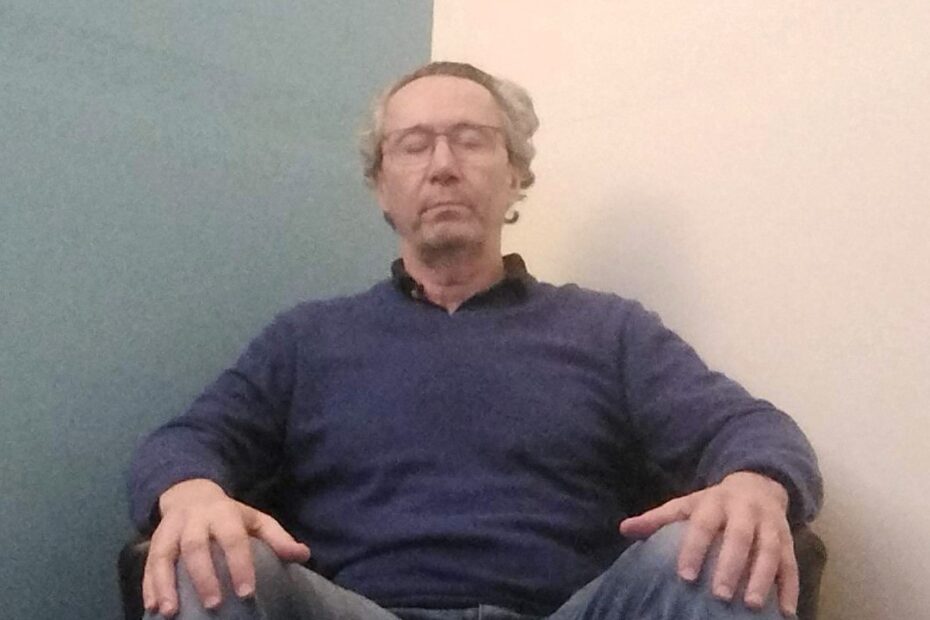
Most New Year’s resolutions have the shelf life of a carton of milk. We start with grand visions in January and, by Valentine’s Day, we’re back to our old patterns. But for many of us, the journey isn’t a straight line—it’s a long, winding road of starts, stops, and “I’ll try again tomorrows.”
If you’ve recently found your way back to the cushion after a long hiatus, you aren’t just “restarting”; you’re building on a foundation that’s been waiting for you since 2017.
The long hiatus: when life gets in the way
Back in January 2017, meditation was the classic resolution that actually stuck. For two years, the rhythm was there. But then, as it often does, life happened. Between 2019 and 2025, a perfect storm of personal hurdles, business pressures, and a global pandemic turned a steady routine into a series of “one-offs.” We’ve all been there. You sit down, you feel that immediate wave of relief and think, “Why did I ever stop doing this?” And then, another six months pass before you do it again. The reality is that habits are fragile. When our external world becomes chaotic, the internal practices are often the first things we drop—even though they are the very things that help us navigate the chaos.
The 2026 shift: finding the “workday window”
Something changed this year. By making daily meditation the foundational goal of 2026, the focus shifted from “fitting it in” to “building it in.” Currently, the success secret has been the Workday Window. By scheduling sessions during work breaks, meditation acts as a mental “reset button” between tasks. It’s no longer an item on a to-do list; it’s a functional part of the professional gear-shift. The weekend hurdle: While workdays provide structure, weekends provide chaos. The lack of a rigid schedule makes it easier for the practice to slip through the cracks. However, the next evolution of this habit starts tomorrow, with the goal of bringing that workday peace into the weekend environment.
The ROI of silence and stillness
Why go through the effort of reclaiming these minutes? The “return on investment” for a consistent practice isn’t just a feeling—it’s a physiological shift. The tangible benefits reported after just a few weeks of consistency are hard to ignore:
- Heightened Calmness: a lower baseline for stress throughout the day.
- Mental Clarity: the ability to see through the “brain fog” of a busy schedule.
- Distance from Distraction: an improved “internal filter” that keeps you on task.
- Superior Sleep: perhaps the most valuable benefit, as a quiet mind leads to a deeper, more restorative rest.
Moving forward
Re-establishing a habit after years of inconsistency is a testament to resilience. It isn’t about being “perfect” since 2017; it’s about being present in 2026. As the weekend practice begins tomorrow, the goal isn’t just to “do it,” but to prove that peace doesn’t require a professional schedule to exist.